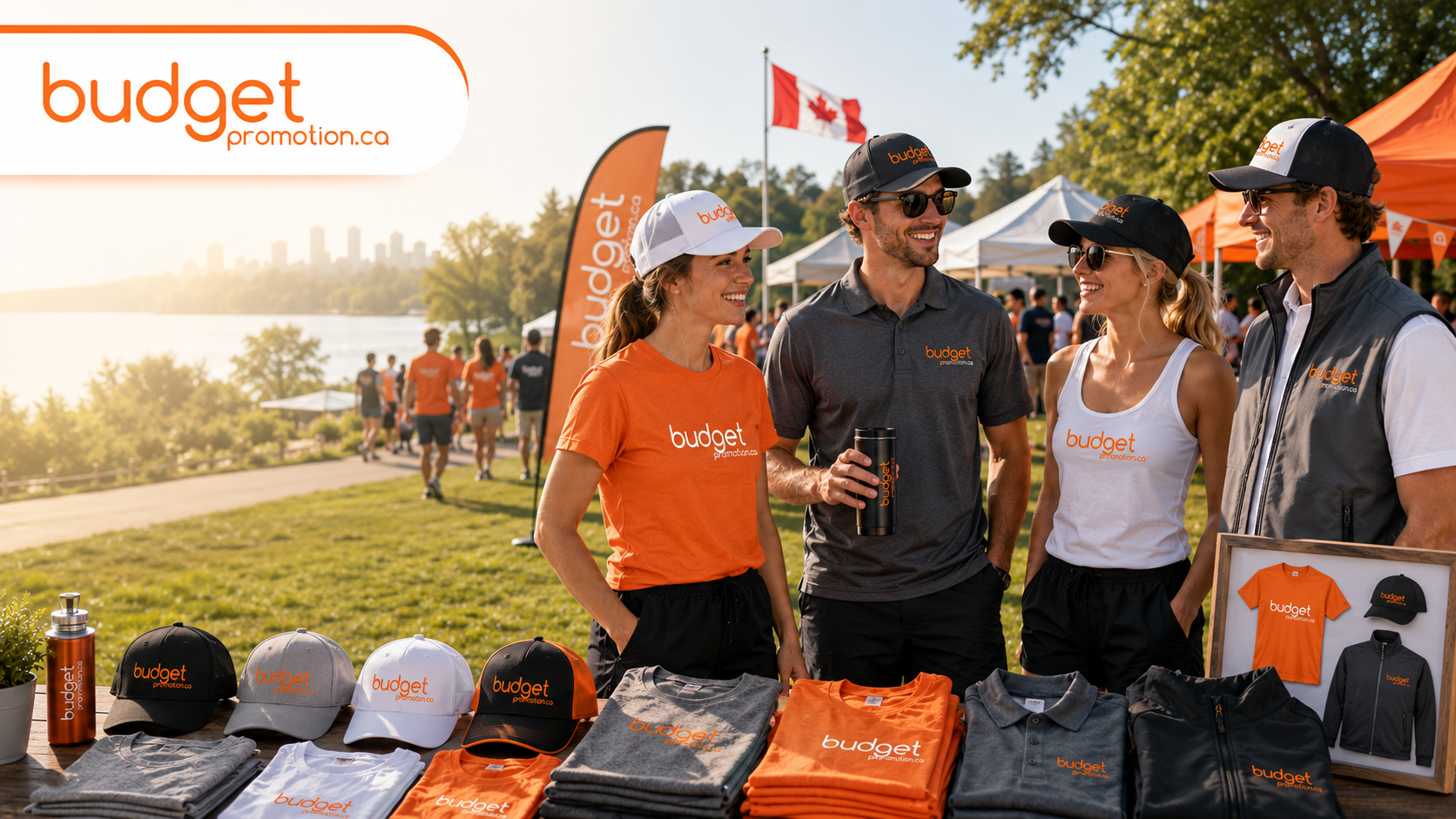
The best fabrics for custom camp apparel aremoisture-wicking polyester and cotton-poly blends for daily camper wear,tightly-woven ring-spun cotton or 100% polyester for sun protection, andmid-weight fleece or brushed poly for cool mornings and evenings. A camp shirt gets worn outdoors six to ten hours a day, through sweat, sunscreen, bug spray, and lake or pool water, often for a week or more between washes. Fabric choice decides whether that shirt still fits and looks right by week three of summer camp.
Budget Promotion works with camps across Canada to source and print fabric like this for cabin groups, staff teams, and full camper rosters. This guide covers what to check before placing acustom camp apparel order: fabric weight, garment type, and decoration method.
What Are the Core Fabric Types Behind Every Camp Order?
Nearly every piece of custom apparel ordered for camp comes down to four base fabrics: 100% cotton, 100% polyester, cotton-poly blends, and tri-blends.
100% cotton runs from a light 4.0 ounces per square yard, about 135 GSM, up to a heavy 6.0 ounces, roughly 200 GSM. Ring-spun cotton, spun from finer, twisted fibers, feels softer and prints more cleanly than open-end cotton, which is coarser and less expensive. Combed cotton removes short fibers before spinning, giving an even smoother surface for custom t shirts that need fine print detail.
100% polyester weighs less for the same warmth, usually 3.5 to 5.5 ounces (120 to 185 GSM), and pulls sweat away from the skin instead of soaking it up. That makes it the standard choice for sports camp jerseys and any custom apparel worn during high-output activity.
Cotton-poly blends split the difference. A 50/50 blend resists shrinking better than pure cotton and holds up to repeated washing, while a 90/10 or 60/40 blend leans closer to cotton's feel with a bit of poly's durability mixed in. Tri-blends add rayon to the cotton-poly mix, producing a lighter, heathered fabric around 3.5 to 4.0 ounces that feels soft against the skin, though it costs more per unit and can be trickier to print on.
For a camp placing one order across counselors, cabin groups, and a leadership team, the fabric choice here sets up everything covered below: how the custom branded apparel handles sun and water, how it takes a logo, and how long it lasts.
How Does Each Fabric Hold Up Against Real Camp Conditions?
Sun, sweat, sunscreen, chlorine, and campfire smoke each affect cotton and polyester differently, and that difference matters more forcustom camp apparel than for almost any other use case.
Sun exposure is measured by UPF, or Ultraviolet Protection Factor. A tightly-woven, darker-colored polyester shirt can reach UPF 30 to 50, blocking 97 to 98 percent of UV rays, while a loosely-knit white cotton tee can fall below UPF 15. Wet cotton loses even more of its protection, which matters directly for any camp built around swimming, canoeing, or paddling.
Sweat and humidity move differently through each fiber. Cotton absorbs moisture and holds onto it, which is why a cotton shirt feels heavy and stays damp through an afternoon of sports camp drills. Polyester wicks moisture to the fabric surface, where it evaporates faster, keeping the wearer drier during the high-activity blocks of a normal summer camp schedule.
Sunscreen and insect repellent contain oils and DEET that can degrade certain synthetic fibers over a season of daily application, and both stain cotton and polyester, though oxybenzone-based sunscreen tends to leave a harder-to-remove mark on light-colored synthetics than on cotton. A mid-tone or darker color for camper apparel hides these marks far better than white or pastel shades.
Chlorine and lake water weaken cotton fibers gradually and fade dye in both fabrics over time, but polyester resists chlorine damage better than cotton and dries in a fraction of the time, which matters for any camp running a pool or waterfront program daily.
Grass, dirt, and campfire smoke wash out of polyester and poly blends more easily than out of cotton, since cotton fibers absorb soot and plant oils into the fiber itself instead of letting them sit on the surface. Camps built around hiking, canoeing, or other water-based programming get the most mileage from tightly-woven synthetic fabric, which is why ouradventuring clothes collection leans heavily on polyester and poly blends.
Which Fabric Works Best for Each Piece of Camp Apparel?
The right fabric changes by garment, since a camp order rarely stops at t-shirts.
Custom hoodies for camp staff or evening wear work best in a mid-weight cotton-poly fleece, usually 8 to 9 ounces, heavy enough to hold shape through repeated washing without becoming stiff or overly warm for a summer evening around the fire.
Custom sweatpants follow the same logic as hoodies. A brushed fleece interior with a poly-heavy exterior sheds moisture from morning dew or wet grass while keeping campers warm during cool-morning activities before the sun is fully up.
Custom shorts for daytime wear do better in 100% polyester or a poly-heavy blend with a bit of stretch, since campers move constantly and a stiffer cotton short restricts motion and takes longer to dry after a water activity.
Custom polo shirts, ordered mostly for camp leadership and staff who need a step up from a t-shirt, work well in a pique-knit cotton-poly blend, which holds its structure and resists wrinkling better than a plain jersey knit while still breathing through a full day outdoors.
Custom trucker caps rely on structured panels, usually a cotton-poly or acrylic front panel over a polyester mesh back, so embroidery holds its shape on the front while the mesh keeps the wearer's head cool.
Custom beanies for early-season or late-season camps use a knit acrylic or wool blend, warm enough for cool mornings without the bulk of a full winter hat.
Custom vests andcustom puffy jackets, both common for shoulder-season outdoor programs, use a polyester or nylon shell over synthetic insulation, since down loses its insulating power when wet and synthetic fill keeps working even after a splash from a canoe paddle or a sudden rain shower.
Whichever combination a camp lands on, orderingsummer camp apparel across this many categories is where most budgets actually go. A single supplier that stocks blanks across all of them, rather than specializing in just t-shirts, cuts down on the number of vendors a camp director has to manage before opening day.
Which Fabrics Hold Their Print Best for Screen Printing, DTF, and Embroidery?
Screen printing, DTF, and embroidery each bond to fabric differently, and camp conditions expose the weak points faster than an office polo or an event shirt would.
Plastisol screen print ink sits on top of the fabric and bonds most reliably to cotton and cotton-heavy blends. On 100% polyester, plastisol can crack sooner under repeated stretching and UV exposure, showing up as a faded, cracked logo by the middle of an eight-week camp season unless the printer uses a low-cure or polyester-specific ink.
DTF, or direct-to-film, transfers adhere to cotton, polyester, and blends more evenly than screen print, and hold up better to the flexing and repeated washing a moisture-wicking polyester camp shirt goes through.
Embroidery avoids the cracking problem entirely, since thread doesn't degrade under UV the way ink can, but it needs a stable, structured fabric underneath. That's why embroidery works well on trucker caps, beanies, and polos, and less well on a lightweight, stretchy performance tee, where dense stitching can pucker the fabric.
Match the decoration method to the fabric underneath, if the camp logo needs to survive sun, sweat, and a full laundry cycle by week four.
Should Staff and Camper Apparel Use the Same Fabric?
Staff and camper apparel call for different fabric decisions, because they get worn under different conditions for different lengths of time.
Staff shirts, polos, and hoodies get worn all season, often multiple times a week, by the same person. A higher-GSM cotton-poly blend or a true performance polyester holds up to that repetition better than a light, low-cost cotton tee, and the higher per-unit cost spreads across many more wears than a single-summer camper shirt ever sees.
Camper apparel usually gets worn for one season and often functions as a keepsake a family keeps long after camp ends. A lighter, more affordable cotton or cotton-poly blend works fine here, since the shirt only needs to survive one summer rather than several, though it still needs enough structure to hold its shape through the photo taken partway through the session, before parents arrive for visiting day.
Spend more per unit on the smaller staff order, if counselors wear their shirts most days of the week, and keep the larger camper order more budget-conscious, where volume matters more than long-term durability.
How Does Fabric Choice Affect Kids' Sizing Over a Camp Season?
Cotton shrinks more than polyester over repeated washes, which matters directly for sizing kids who might grow between the order date and the last week of camp.
Untreated 100% cotton can shrink 3 to 5 percent after its first few washes, enough to turn a properly-fitted youth medium into a snug fit by mid-season. Preshrunk cotton and cotton-poly blends shrink closer to 1 to 2 percent, keeping sizing more predictable across an eight-week program.
Order youth sizes a half size larger than the chart suggests, if the program runs four weeks or longer, to leave room for both shrinkage and normal summer growth. Fabrics with a small amount of stretch, usually from added spandex or a poly-elastane blend, also hold their fit through the kind of constant movement a full day of games and outdoor adventures involves, rather than sagging out the way a pure cotton knit can by week three.
How Do You Care for Camp Apparel When Laundry Isn't Guaranteed?
Choosing polyester or poly-heavy blends makes camp apparel easier to manage between washes, since they resist odor and dry faster than cotton over a week or more without laundry access.
Cotton fibers hold onto sweat and bacteria more readily than polyester, which is why some performance polyester carries an antimicrobial finish specifically to extend the time between washes without the shirt developing a noticeable smell, a real advantage for any custom camping apparel worn daily at a sleepaway program.
Quick-dry fabric matters just as much for overnight or multi-week camps, where a shirt still damp from an evening wash won't be dry by the next morning's activities. A 100% polyester or poly-heavy blend typically dries in under two hours on a clothesline, compared to four hours or more for a heavier cotton tee.
For camps with laundry access, cotton-poly blends tolerate machine washing and drying better than pure cotton, holding their shape and color through a full season rather than fading or pilling by the halfway point.
What Are the Best Sustainable Fabric Options for Camps?
Organic cotton and recycled polyester are the two most common sustainable options for custom camp apparel, and both perform close to their standard counterparts.
Organic cotton is grown without synthetic pesticides or fertilizers and behaves the same as standard cotton in weight, feel, and print compatibility, making it a straightforward swap for camps that want their merchandise to match an outdoor education or environmental mission.
Recycled polyester, often labeled rPET, is made from post-consumer plastic, most commonly recycled water bottles, spun into new polyester fiber. It performs nearly identically to virgin polyester for moisture-wicking and durability, and it has become common enough in the custom apparel industry that it usually adds only a small premium over standard poly blanks.
For a nature camp, outdoor education program, or any camp with an environmental focus built into its programming, ordering custom merch in organic cotton or recycled polyester extends that message onto the one item every camper takes home.
How Much Does Fabric Choice Actually Cost at Camp Order Volumes?
Fabric type changes the per-unit cost of a camp order by roughly 2 to 4 dollars CAD in most cases, and that difference multiplies fast at camp volumes.
A basic 100% cotton tee typically sits at the lower end of a custom apparel price list, while a cotton-poly blend adds a modest premium for the added durability and reduced shrinkage. Performance polyester and moisture-wicking blends sit higher again, and tri-blends usually land at the top of the range for a basic tee style.
That per-unit gap adds up differently depending on group size. A 50-unit staff order absorbs a higher per-unit fabric cost more easily than a 300-plus camper order, where even a small increase per shirt changes the total budget by hundreds of dollars. Many camps split the difference: performance fabric for staff, who wear it most, and a more budget-friendly cotton-poly blend for the larger camper run.
A supplier that stocks a range of fabric weights and blends in-house, rather than sourcing each style through a different overseas vendor, tends to hold pricing steadier across reorders. That consistency matters for a camp comparingbest camping apparel options before committing to one supplier for the whole season.
Frequently Asked Questions
Will 100% cotton camp shirts shrink over a summer of washing? Yes. Untreated cotton can shrink 3 to 5 percent after the first few washes.Preshrunk cotton or a cotton-poly blend cuts that shrinkage down to about 1 to 2 percent, keeping sizing closer to accurate through a full camp season.
Does polyester camp apparel smell after heavy sweat? Standard polyester can hold odor more than people expect, since sweat bacteria bond easily to synthetic fiber.Polyester treated with an antimicrobial finish resists odor noticeably better than untreated poly or cotton over multiple days of wear between washes.
Can you screen print on moisture-wicking polyester without the print cracking? Yes, with the right ink.Low-cure or polyester-specific plastisol ink bonds to synthetic fabric without the cracking that standard cotton-formulated ink can show after repeated stretching and sun exposure. DTF transfers are also a reliable option on performance polyester.
What's the best fabric for a hot-weather day camp versus a multi-week overnight camp? Choose a lightweight, 3.5 to 4.5 ounce polyester or poly-blend tee, if the program runs single days rather than overnight weeks.A multi-week overnight camp benefits more from a slightly heavier 5.0 to 5.5 ounce cotton-poly blend, which holds up to daily wear and repeated washing better than an ultralight fabric built mainly for single-day heat.
Why Choose Budget Promotion for Custom Camp Apparel?
Budget Promotion is a Calgary-based custom merchandise team that outfits camps, sports teams, schools, and workplaces across Canada with custom apparel built for how it actually gets worn.
If you're comparing custom merchandise Calgary suppliers for an upcoming camp order, here's what working with us looks like. Most apparel orders are produced in 5 to 10 business days after mockup approval, with rush options available for orders placed closer to opening day. There are no minimum order requirements, so a small leadership team order and a 300-camper order both get handled at exactly the quantity needed. Every design goes through unlimited mockup revisions before production starts, and full-colour printing carries no limit on the number of colours or gradients used. We price match competitor quotes on comparable quality, and production happens in-house rather than through a rotating list of overseas vendors.
As a custom merch Canada supplier working with camps, schools, and sports organizations nationwide, we handle single-cabin orders and multi-site league uniform kits under the same no-minimum policy. More than 20,000 companies across Canada have used Budget Promotion for custom merch, including summer camp apparel, corporate uniforms, and team gear.
Head to theBudget Promotion homepage, or explore ourcustom camp apparel lineup directly, to start a quote for this season's order.


