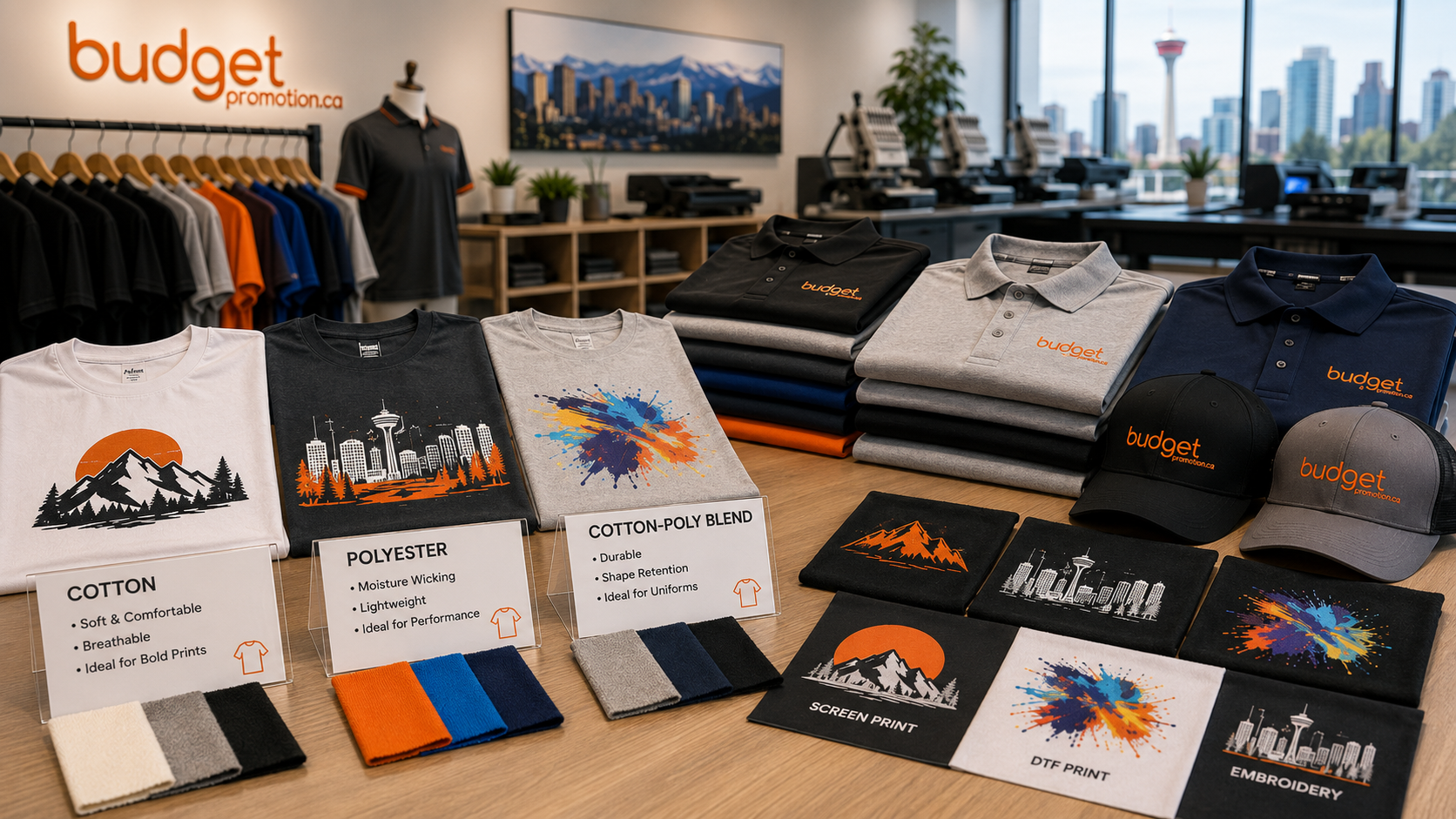
Cotton vs Polyester T-Shirts: Which Fabric Is Best for Custom Branded Apparel?
Cotton and polyester feel different, print different, and last different lengths of time. That difference matters once you order shirts for a team, business, or school. This guide breaks down the real difference between polyester and cotton for custom branded apparel. It answers the one question that matters. Which fabric is best for custom branded apparel in your situation?
This is not a fabric science lecture. It is a buying guide for people who already decided on custom apparel. Most searches for cotton vs. polyester never mention who actually wears the shirt, and that is the real deciding factor.
Some buyers care most about a comfort fabric for daily wear. Others care more about how long the shirt survives the wash. You just need to pick the right material before you order.
Cotton: What It Brings to a Branded Shirt
A cotton tshirt feels soft right out of the bag. Cotton is a natural fiber. It breathes well and absorbs sweat instead of pushing it away from the skin.
Screen printing loves cotton. The fibers soak up ink deeply. Colors stay bold and vivid for a long time. That is one reason cotton sits high on any list. It ranks among the best fabrics for custom t-shirts today.
Cotton has tradeoffs too:
-
Shrinks a few percent without pre-shrinking
-
Wrinkles faster than synthetic blends
-
Wears down quicker under heavy friction
-
Stays hypoallergenic and biodegradable
Pick cotton tshirts when comfort and bold print colors matter most. It works well for events, spirit wear, and casual branded gear. That makes it one of the best fabric for t shirts choices around.
Polyester: What It Brings to a Branded Shirt
A polyester tshirt handles moisture differently than cotton. Polyester is a synthetic fiber built for performance. It pulls sweat to the surface, so it evaporates fast.
Polyester resists wrinkles and shrinking through many washes. It holds shape and color far longer than plain cotton. Polyester dries quickly too, which matters for uniforms and sportswear.
Here is what sets polyester material vs cotton apart:
-
Moisture-wicking design for physical activity
-
Strong shape retention through repeat washing
-
Less breathable in high heat
-
Excellent structure for embroidery detail
Polyester needs specialized inks for clean screen printing results. This step avoids dye migration and keeps logos crisp. Choose a polyester tshirt when durable fabric matters more than softness. Polyester and its blends rank among the most durable fabrics for daily-wear apparel. In the polyester vs cotton debate, polyester wins on wear and tear.
Cotton-Poly Blends: The Middle Ground
Most business orders never land on pure cotton or pure polyester. They land on a blend. Cotton poly blend t shirts balance comfort, cost, and durability better than either fabric alone.
Common blend ratios include:
-
50 cotton 50 polyester t shirts for balanced comfort and durability
-
60/40 and 65/35 blends for a cotton-forward feel
-
80/20 CVC blends for softness with added strength
-
Tri-blend fabric, which adds rayon for extra drape
A tri blend t shirt vs cotton comparison usually favors the tri-blend. It wins on stretch and softness. It costs more, but many teams find it worth the price. Cotton poly blend polo shirts are a common pick for corporate teams too. Any cotton polyester blend t shirts order should match the ratio to the job.
Cotton vs Polyester vs Blends at a Glance
| Feature | Cotton | Polyester | Blend |
|---|---|---|---|
| Breathability | High | Moderate | High |
| Moisture Management | Absorbs | Wicks away | Balanced |
| Durability | Moderate | High | High |
| Best Print Method | Screen printing | Embroidery | Both |
| Feel | Soft | Smooth | Soft and strong |
| Typical Cost | Lowest | Higher | Mid-range |
| Best For | Events, spirit wear | Uniforms, sportswear | Business orders |
This table answers the core cotton vs polyester t shirt question at a glance. It also settles the cotton t shirt vs polyester debate for most buyers. Use it as a quick reference before you order.
Matching Fabric to Print Method
The best fabric for custom t-shirts also depends on your print method. Each technique performs differently depending on the material underneath it.
-
Screen printing works best on cotton and cotton-heavy blends. Ink soaks into the fiber, so colors stay vivid. This makes cotton the best fabric for screen printing in bulk orders. People often search for the best t shirt fabric for screen printing in bulk. Cotton is the answer. Either way, it keeps costs low at volume.
-
Embroidery works on any fabric, but shines on polyester and blends. The fiber holds its shape under stitching. This makes it the best fabric for embroidery on polos, caps, and jackets.
-
DTF printing works across cotton, polyester, and blends with no fabric limits. This makes it the best fabric for dtf printing full-color or detailed designs.
Custom logo printing looks sharpest when the method matches the fabric. Get this pairing right, and your custom tshirt printing project holds up for years. The same logic applies to any custom print tshirt run, big or small.
Which Fabric Fits Your Industry?
The right fabric changes once you factor in who wears the shirt. A construction crew and a golf event need completely different fabric logic. Here is a quick breakdown by industry, built around real use cases.
Trades and Construction
Heavyweight cotton or a poly-cotton blend works best for trade crews. Job sites involve abrasion, dirt, and long hours outdoors. A blend resists staining better than plain cotton and holds up to industrial washing.
Cotton or polyester for embroidered work shirts comes down to logo placement. Polyester and blends embroider more cleanly for company names and crew logos. This makes custom uniforms for trades a strong case for blended fabric.
Schools
100% cotton or an 80/20 cotton-heavy blend works best for schools. It stays soft against kids' skin during all-day wear. Cotton also keeps costs low for bulk spirit-wear orders.
Custom tee shirts for schools need bright, durable graphics. Cotton's ink absorption gives mascot colors real punch. Parents also already know how to wash a cotton tshirt without shrinking it.
Sports Teams
Performance polyester or a poly-heavy blend wins for sports teams. Moisture-wicking fabric matters during any physical activity. Polyester also survives frequent washing better than cotton across a full season.
What fabric should I use for custom team shirts? Polyester, in almost every case. Custom sports merch, custom sports uniforms, and custom basketball uniforms all need quick-dry fabric. Colorfast polyester holds team colors through wash after wash.
Restaurants
A poly-cotton blend works best for front-of-house restaurant staff. Kitchen and back-of-house roles do better in performance polyester. Both resist stains and wrinkles better than plain cotton.
Custom restaurant uniforms need frequent industrial washing. Blends and polyester handle that cycle without breaking down. Dark colorways help hide stains too, though that's a styling choice, not a fabric one.
Corporate Teams
Poly-blend fabric suits polos and daily uniform pieces best. Cotton or a lighter blend works for casual team tees and one-off events. Cotton vs polyester t shirts for company uniforms comes down to one thing. How often does the shirt get worn?
Custom corporate t shirts and custom corporate polo shirts both benefit from wrinkle resistance. It keeps a polished look through travel and long days. Custom golf tees for corporate outings also do well in moisture-wicking blends. Cotton poly blend polo shirts remain the safest pick for most office teams. The same goes for custom polo tee orders.
Non-Profits and Fundraisers
100% cotton or a cotton-heavy CVC blend works best for fundraisers. These events usually involve one-time bulk orders on a tight budget. Cotton keeps the per-unit price low for walks, drives, and volunteer days.
Custom event merch and custom event merchandise both lean on cotton's print vibrancy. Screen-printed cause messaging looks bold and clear on cotton. It also stays comfortable across a wide range of volunteer body types.
Durability and Care
Screen-printed graphics typically hold up for 40 to 80 washes before fading. Embroidery usually outlasts the garment itself. Polyester and blends hold their shape and color the longest over time.
Pure cotton needs more careful laundering to avoid shrinkage. Apparel that gets washed often, like uniforms and workwear, should lean poly or blend. This is also where best fabrics for summer and best fabric for winter come into play. Cotton breathes better in summer heat. Poly-blends trap a bit more warmth in cold months, which helps in winter gear.
Cost Considerations for Bulk and Custom Orders
Cotton is usually the cheapest option per unit for large screen-printed runs. Polyester and performance fabric cost more upfront, but they reduce how often you reorder. Blends usually land in the middle as the best value pick.
Budget Promotion sets no minimum order quantity on custom apparel. That means cost here is about fabric price and reorder frequency, not a volume threshold.
How to Decide
Start with who wears the shirt and how often. Add in the environment, the print method, and the budget. These four factors point you toward the right fabric almost every time.
Still unsure which fabric is best for custom branded apparel? Scroll back to the industry section above. It gives a direct answer for trades, schools, sports, restaurants, corporate teams, and non-profits.
Budget Promotion helps Calgary businesses pick the right fabric for every custom apparel order. Their team walks you through fabric, print method, and budget in one conversation.
Frequently Asked Questions
Is cotton or polyester better for screen printing?
Cotton, in most cases. Its fibers absorb ink deeply, so colors stay bright and last longer. Screen printing on cotton also costs less at volume. That matters for bulk business orders and fundraiser shirts alike.
What fabric blend is best for company t shirts?
A 50/50 or 65/35 poly-cotton blend suits most company shirts. It stays comfortable for all-day wear and holds up to frequent washing. This blend also works well for both screen printing and embroidery.
Does polyester or cotton last longer for work uniforms?
Polyester and poly-blends last longer under frequent industrial washing. Cotton alone wears down faster in high-abrasion jobs like trades and kitchen work. For daily uniforms, polyester content adds real durability over time.
Can you embroider on a cotton polyester blend?
Yes, blends embroider cleanly. The polyester content adds structure that holds stitch detail well. This makes cotton-poly blends a standard choice for polos, jackets, and caps across most industries.
What GSM is best for custom t shirts?
Midweight fabric, around 150 to 200 GSM, works best for most orders. It holds up to screen printing without feeling too warm for daily wear. Heavier GSM suits workwear, while lighter GSM suits summer events.
Ready to Order Custom Branded Apparel?
Budget Promotion prints and embroiders custom apparel for teams, schools, restaurants, and businesses across Calgary. Their in-house screen printing, embroidery, and DTF services cover every fabric on this list. There is no minimum order quantity. Small teams and large companies order with the same ease.
Need custom merch canada wide? Budget Promotion also ships Canadian custom apparel to businesses beyond Calgary. Their custom merchandise calgary clients trust them for custom business merchandise and custom promotional merchandise. Everyday custom tshirts orders get the same care.
Want to make custom tee designs that actually hold up? Budget Promotion also handles custom polo shirts for offices and clubs across Alberta. Request a free quote today. Get expert help picking the right fabric for your next custom tshirt order.


