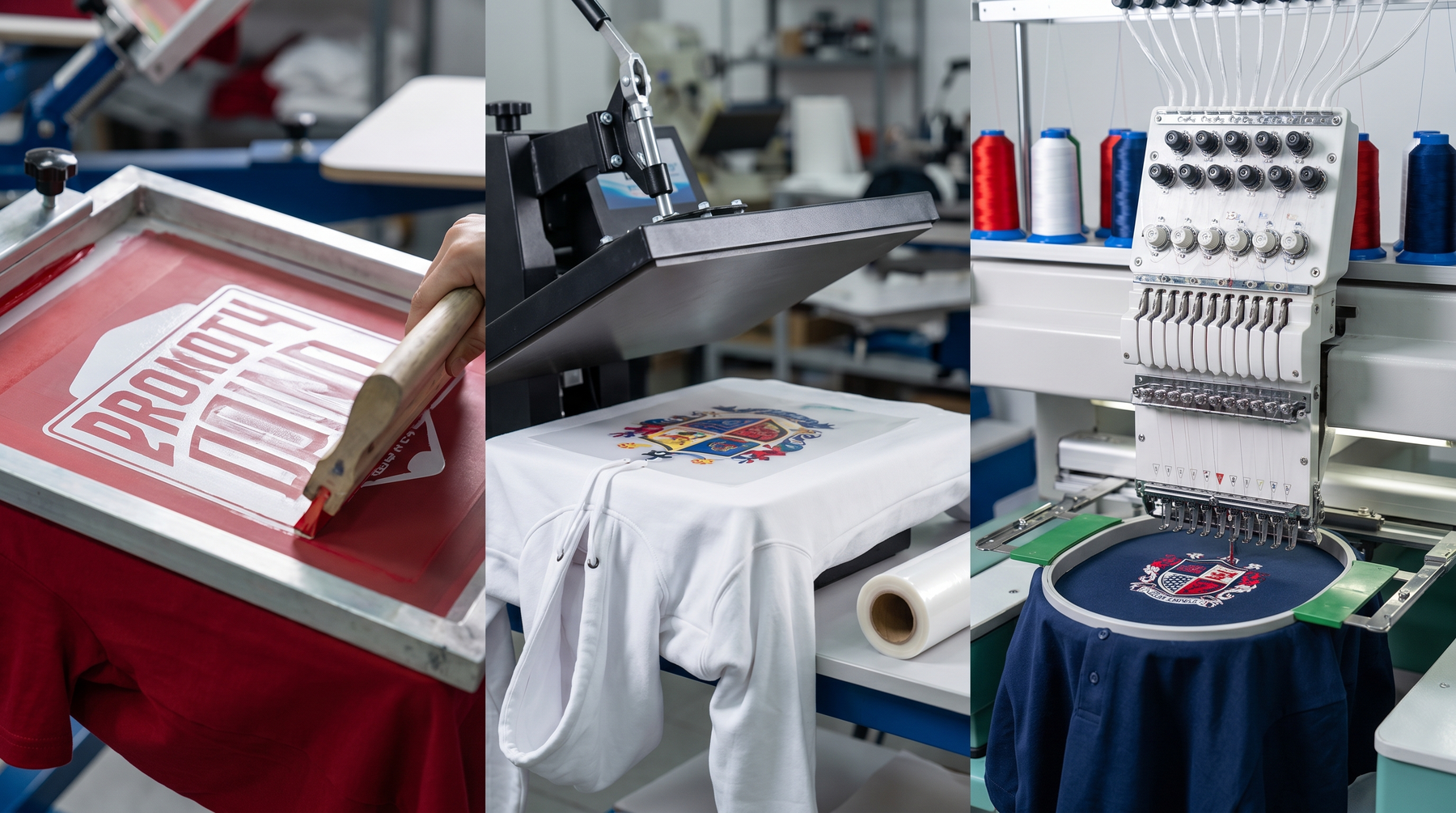
Screen Printing vs DTF vs Embroidery: Which Is Best for Your Project?
Choosing the right decoration method changes the final look of your branded apparel. Screen printing vs DTF and embroidery vs printing, each method suits a different type of project. The right choice depends on 4 factors: order size, design complexity, fabric type, and durability. Read this guide to get a clear answer fast.
What Is Screen Printing?
Screen printing pushes ink through a mesh screen onto the garment surface. Each color in your design requires a separate screen during production. Screen printing works best for bold, solid designs with up to 6 flat colors. It produces a vibrant print that lasts through 50 or more wash cycles.
Traditional screen printing uses plastisol ink for rich, long-lasting color on cotton apparel. The unit cost drops at higher quantities, making it the most budget-friendly option at scale. T-shirts, hoodies, and tote bags are the most popular screen print products. Note that screen print setup is charged per color and per location, and setup fees apply again on reorders.
Best Use Cases for Screen Printing:
- Custom t-shirts for events, races, or corporate giveaways
- Hoodies and crew necks with 1 to 4 color logos
- Bulk apparel orders where lower cost per unit matters
- Simple design artwork with flat, solid colors
What Is DTF Printing?
DTF stands for direct-to-film. DTF printing first prints the design onto a special film, then transfers it directly into the fabric using heat. DTF transfers produce full-color designs with fine detail on almost any garment. DTF prints typically last 50 to 100 wash cycles under standard care conditions.
Direct-to-film printing works on cotton, polyester, nylon, and blended fabrics. DTF wins on flexibility because it handles full-color artwork including gradients and photographic detail. DTF printing carries no setup fee, making it ideal for small or one-off orders. Budget Promotion offers DTF with a standard turnaround of 5 business days after mockup approval. Get your quote started today at budgetpromotion.ca.
Best Use Cases for DTF:
- Small runs or single-unit orders
- Full-color designs with gradients or photographic detail
- Polyester performance wear and technical apparel
- Brand samples before committing to bulk production
What Is Embroidery?
Embroidery uses thread to stitch your design directly into the fabric. A machine reads a digitized file and embroiders the logo stitch by stitch. Embroidery uses thread in up to 12 colors per design. The raised texture and stitched finish last the full lifetime of the garment.
Embroidery is the gold standard for corporate branded apparel. It suits structured garments like polos, jackets, caps, and hoodies. Embroidery cannot reproduce fine gradients or thin fonts, so bold, clean logos work best. To embroider your logo, Budget Promotion charges a one-time digitizing fee per design, with reorders using the same file at no extra digitizing cost.
Best Use Cases for Embroidery:
- Corporate polos and dress shirts with a brand logo
- Staff jackets and outerwear for client-facing teams
- Caps, beanies, and structured headwear
- Uniform programs requiring long-term durability
Screen Printing vs DTF vs Embroidery: Direct Comparison
Each printing technique has clear strengths. Your order details determine which method delivers the best results. Use this table to compare all 3 decoration methods across the factors that matter most for your brand.
| Factor | Screen Printing | DTF | Embroidery |
|---|---|---|---|
| Minimum Order | No minimum | No minimum | No minimum |
| Color Limit | 1 to 6 solid colors | Unlimited | 1 to 12 thread colors |
| Best Fabrics | Cotton and cotton blends | All fabric types | Pique, twill, and fleece |
| Durability | 50+ wash cycles | 50 to 100 wash cycles | Lifetime of garment |
| Texture | Flat and smooth | Flat and flexible | Raised and stitched |
| Cost at Scale | Most cost-effective | Moderate | Moderate to high |
| Setup Cost | Per color and per location. Setup fees recur on reorders. | None | One-time digitizing fee |
| Standard Turnaround | 10 business days | 5 business days | 10 business days |
| Best Garments | T-shirts and hoodies | All apparel | Polos, jackets, and caps |
All turnaround times start after final mockup approval.
4 Factors That Determine the Best Print Method for Your Order
The best print method depends on the specifics of your order, not on personal preference. Four factors point directly to the right decoration method for your brand.
1. Order Quantity
All 3 decoration methods at Budget Promotion carry no minimum order requirement. Screen printing becomes more cost-effective as quantity increases due to setup costs spread across more units. DTF printing has no setup fee, so the cost per unit stays consistent regardless of quantity. Embroidery includes a one-time digitizing fee that applies to the first order only.
2. Design Complexity
Design complexity determines how accurately each method reproduces your artwork. Screen printing works best for a simple design with up to 6 flat, solid colors. DTF handles full-color designs, gradients, and photographic detail with no color limitations. Embroidery works best with clean, bold logos, 4 or fewer colors, and no gradient transitions.
3. Fabric Type
DTF printing adheres to polyester, nylon, cotton, and all blended fabrics equally. Screen printing works best on 100% cotton or cotton-rich blend garments. Embroidery suits structured, woven garments like pique polos, twill jackets, and fleece hoodies.
4. Durability Requirements
Embroidery is the most durable decoration method because stitched thread lasts the lifetime of the garment. Screen printing withstands 50 or more wash cycles with plastisol ink cured at high heat. DTF prints typically last 50 to 100 wash cycles under normal care and washing conditions.
Screen Printing vs DTF: Which Is Right for Your Brand?
Screen printing vs DTF is the most common decision for custom apparel orders. Both methods produce a flat finish on the garment surface. The real difference lies in quantity economics, color count, and fabric type.
Screen printing uses a mesh screen and ink to deliver bold, durable prints at scale. Direct-to-film printing uses heat and a special film to produce full-color prints on any fabric. Budget Promotion handles both methods entirely in-house, with no outsourcing and no delays. Visit budgetpromotion.ca and get a free custom quote with a method recommendation based on your artwork and garment.
Choose Screen Printing When:
- Your order is large enough that lower cost per unit matters
- Your design uses 6 or fewer solid colors
- Your garments are cotton or a cotton-rich blend
- You do not expect frequent reorders because setup fees recur each time
Choose DTF When:
- Your order is small or a single unit
- Your artwork includes gradients or more than 6 colors
- Your garments are polyester or performance fabric
- You need a faster turnaround because DTF delivers in 5 business days
Embroidery vs Printing: When to Embroider Instead of Print
Embroidery vs printing comes down to texture, purpose, and garment type. Embroidery creates a raised, stitched texture on the garment surface. Screen printing and DTF produce a flat, smooth surface on the fabric. The end use of the garment makes the decision clear.
Embroidery is the right choice for professional and corporate branded apparel. It suits polos, jackets, caps, and structured workwear programs. Screen printing and DTF suit casual apparel, event t-shirts, and promotional hoodies. The brand context, professional versus promotional, determines the best decoration method.
Choose Embroidery for:
- Corporate uniforms and staff polos
- Branded jackets for executives or client-facing teams
- Caps and headwear with a front logo
- Any garment requiring lifetime durability
Choose Screen Printing or DTF for:
- Event t-shirts and promotional hoodies
- Trade show giveaways and bulk branded merchandise
Which Method Works Best for Each Garment Type?
Different garments perform differently with each decoration method. Use this list to match your apparel to the right printing technique before placing your order.
- T-shirts: Screen printing delivers the best value for large cotton t-shirt orders. DTF suits small runs and full-color artwork on any fabric type.
- Hoodies: Screen printing works well for chest or back logo placement on hoodies. Embroidery suits smaller logo placement on the chest or sleeve of hoodies.
- Polos: Embroidery is the standard decoration method for corporate branded polos. It creates a clean, professional look that screen print cannot replicate on structured pique fabric.
- Jackets: Embroidery delivers the best durability and professional finish on branded jackets and outerwear.
- Caps: Embroidery is the most reliable decoration method for structured caps and beanies. Screen print and DTF do not adhere cleanly to curved cap panels.
- Performance Wear: DTF printing is the best choice for polyester and dri-fit garments. Screen print ink does not bond properly to most performance fabrics.
Budget Promotion Recommends the Best Method for Your Brand
Budget Promotion is a Calgary-based custom apparel company serving businesses, schools, sports teams, and organizations across Canada. The in-house production team handles screen printing, DTF, and embroidery under one roof, with no outsourcing and no quality gaps between what you approve and what you receive.
Every order at Budget Promotion follows a clear 4-step process: submit your artwork and quantity, approve your quote and pay, approve your digital mockup, then receive an order status update when production completes. The team contacts you within 1 hour of a quote submission. Visit budgetpromotion or call 403-259-8275 to start your order today.
Frequently Asked Questions
1. What Is the Difference Between Screen Printing and DTF Printing?
Screen printing uses a mesh screen to push ink onto fabric, with a separate screen required per color. It delivers the best value at higher quantities. DTF printing transfers a full-color design from a special film onto any fabric type with no setup fee and a 5-business-day standard turnaround after mockup approval.
2. Is Embroidery More Durable Than Screen Printing?
Embroidery is the most durable decoration method for branded apparel. Stitched thread lasts the full lifetime of the garment. Screen printing withstands 50 or more wash cycles with plastisol ink correctly cured. Embroidery is the right choice for corporate uniforms, workwear, and high-wash garment programs.
3. Does Budget Promotion Have a Minimum Order Quantity?
Budget Promotion has no minimum order requirement across all 3 decoration methods: screen printing, DTF, and embroidery. Orders of any size are accepted. Screen printing becomes more cost-effective at higher quantities because setup costs are spread across more units.
4. Can Embroidery Work on Thin or Stretch Fabrics?
Embroidery works best on structured, woven fabrics like pique polos, twill jackets, and fleece hoodies. Thin or stretchy fabrics pucker and distort around embroidery stitching. Screen printing or DTF printing delivers better results on lightweight, stretch, or sheer fabric types.
5. Do Screen Print Setup Fees Apply on Reorders?
Screen print setup fees are charged per color and per location, and they recur on reorders. DTF printing has no setup fee. Embroidery uses a one-time digitizing fee. Reorders use the same digitized file at no additional digitizing cost, as long as the design remains unchanged.


